Look at the whole object.
The front gets the attention. The back, packaging, tiny copyright line, and original instructions often answer the better questions. Document the details before drawing a conclusion.
ABOUT SATOSHI FINDS
I’m satoshi. I collect things that make me curious.
A familiar character on an unfamiliar card. A detail on the back that nobody seems to mention. Something that makes you stop and ask where it came from, who made it, and how it ended up here.
Satoshi Finds is where I follow those questions.
WHY THIS EXISTS
Cards. Games. Toys. Packaging.
Whatever makes me look twice.
Collecting gives you a reason to notice things. A different logo. An unexpected back. A card that came with a meal, a magazine, or a product you would never think to look inside.
I want to understand those details and the people, releases, and decisions behind them. That means looking beyond the listing, finding the original material where possible, and keeping track of what the evidence actually establishes.
This site gives that work a permanent home. A post can start a conversation. A dedicated report gives the photographs, sources, comparisons, and later discoveries somewhere to stay together.
Pokémon is part of the story here. So are the games, toys, cards, and other collectibles that catch my attention. The subject can change. The curiosity stays the same.
HOW I APPROACH THE WORK
The goal is a record another collector can read, question, and build on.
The front gets the attention. The back, packaging, tiny copyright line, and original instructions often answer the better questions. Document the details before drawing a conclusion.
A period advertisement, manufacturer announcement, or surviving booklet can tell us how something actually reached people. Give readers the sources so they can follow the research themselves.
A copyright year is not automatically a release date. A low grading population does not tell us how many were made. Keep documented facts, informed interpretations, and open questions distinct.
A clearer scan or a newly found source can change the story. These reports are meant to grow. Corrections belong in the record, along with the evidence that explains them.
Image credits and source notes belong with the work. When an image is a reference rather than the exact specimen being discussed, that distinction matters too.
FROM QUESTION TO COLLECTION
THE OBJECT AND ITS CONTEXT
See the object clearly. Read the source notes. Compare the variants. Follow the story as new evidence comes in.
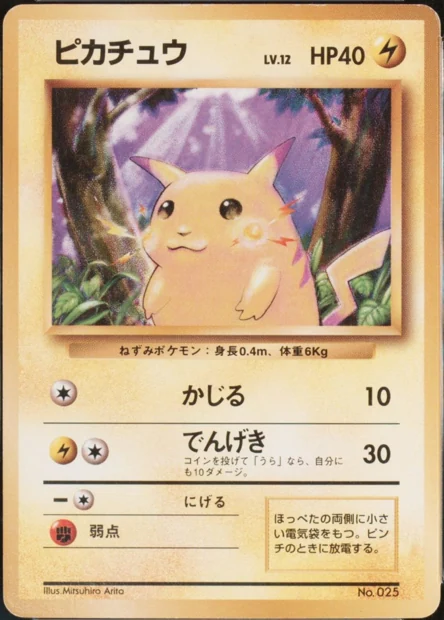
Inside Before the BoosterFollow early Pikachu cards through their releases, print variants, promotions, and the details that set them apart.
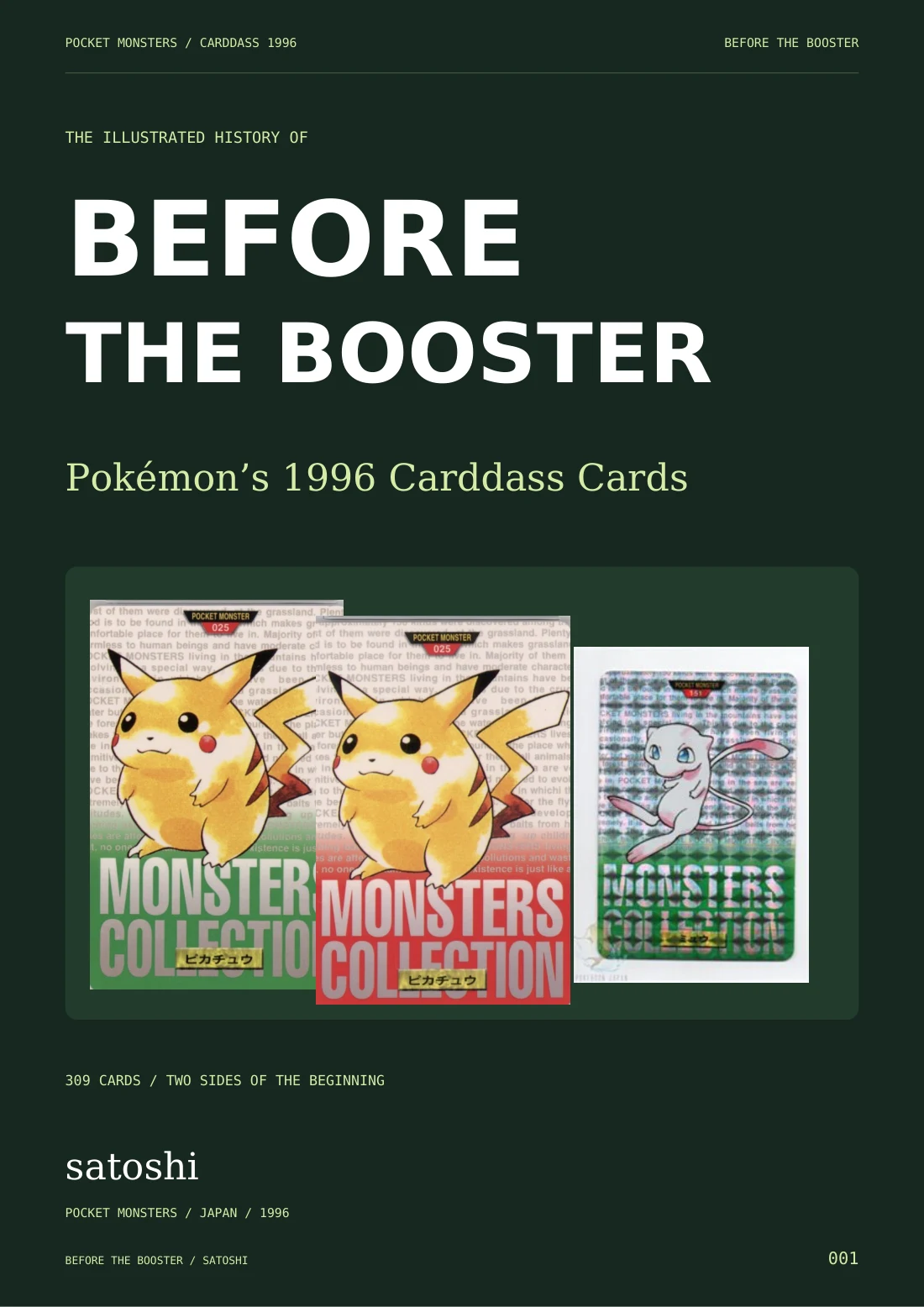
Explore the timelineExplore the 1996 Pocket Monsters Carddass collection through its fronts, reverses, complete set views, and illustrated reference book.
Open the collectionCollection studies, individual finds, and the questions they raise. Every documented object gets a place for its story to grow.
Read the reportsRESEARCH GETS BETTER TOGETHER
You might have the detail that makes the next report better. I’d like to see it.
Get in touchFronts, backs, packaging, booklets, or a detail the available images do not show.
A dated advertisement, catalog, announcement, receipt, or other surviving record.
Something I missed, a different variant, or evidence that changes a conclusion.
Include the report or object you’re referring to, where your material came from, and what you noticed. If you’re sharing your own photos, let me know whether I may publish them and how you’d like to be credited.
HELP BRING THE NEXT STORY TO LIGHT
Every donation goes toward buying and documenting collectibles. Your support helps me get the objects in hand, examine the details, and share what I find.
Thanks for looking closer.There’s always another find.
@satoshifinds