A small white card can carry a much larger story. These KFC cards place Pokémon in an everyday American setting: a restaurant counter, a Kids’ Meal, and a game small enough to take home in your pocket.
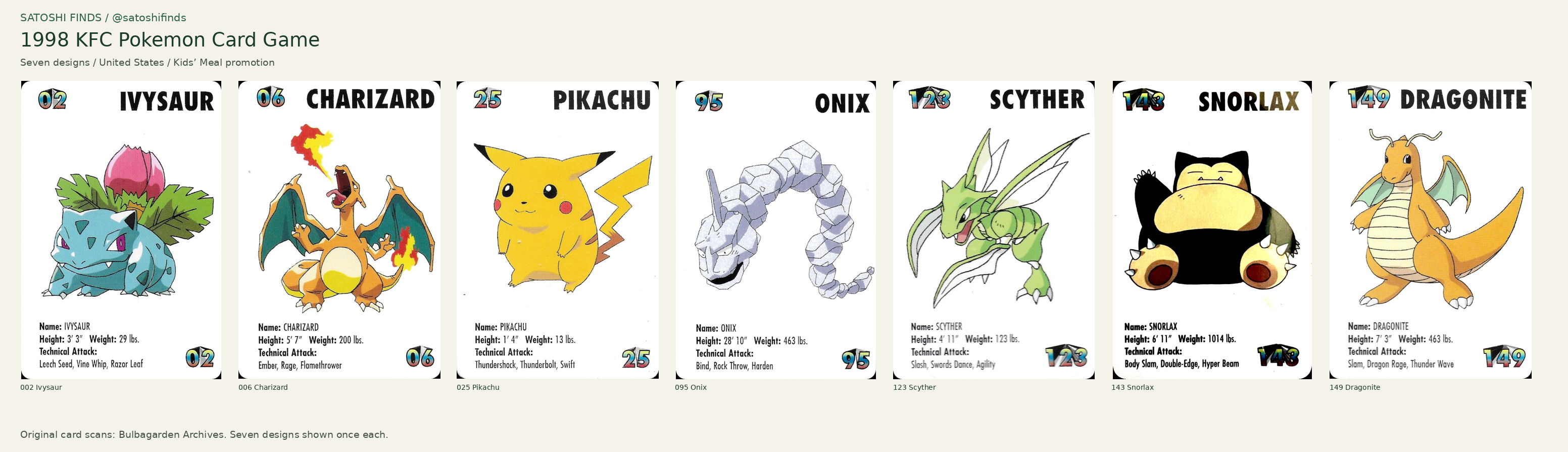
The collection below brings together all seven front designs and their shared reverse. It preserves the original scans, with a separate record for every subject and room for later research.
Where this belongs in the timeline
The Kids’ Meal promotion ran in the United States from November 15, 1998 to January 3, 1999. Contemporary reporting published on November 1, 1998 describes those dates, while separately dating the beanbag offer to November 9–December 20, 1998.
This is a 1998 promotion. A legacy image filename containing “1995” is not release evidence. Nor does a copyright year, by itself, establish when a promotional item reached customers.
Seven designs, a game in its own right
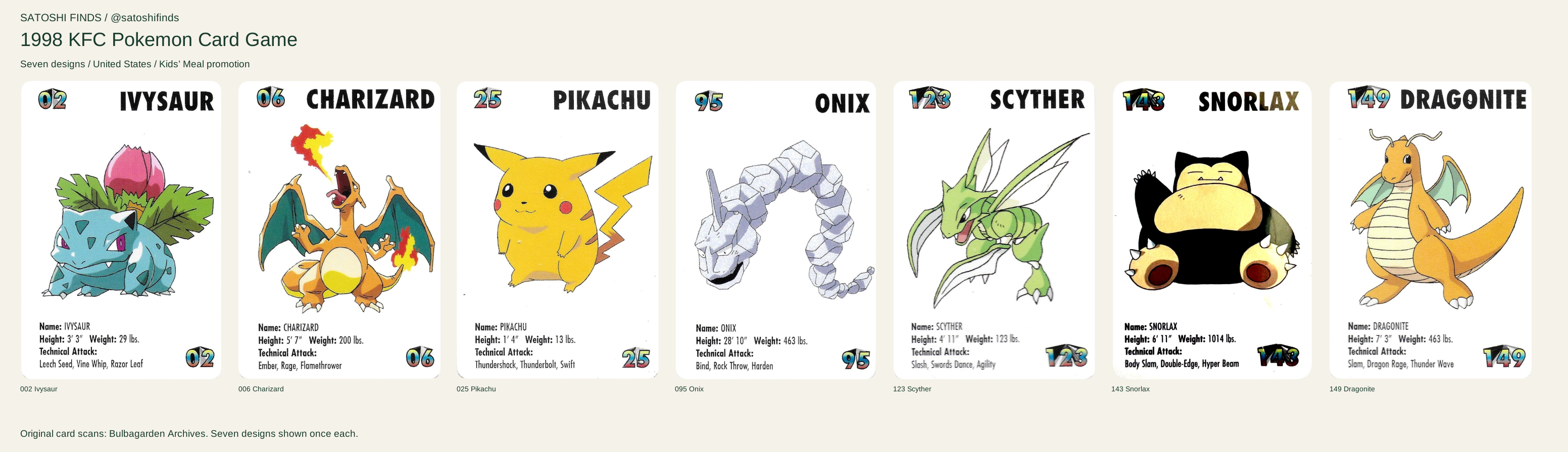
The subjects are Ivysaur, Charizard, Pikachu, Onix, Scyther, Snorlax, and Dragonite. Their printed numbers are Pokémon numbers; a Dragonite marked 149 does not imply a 149-card KFC set.
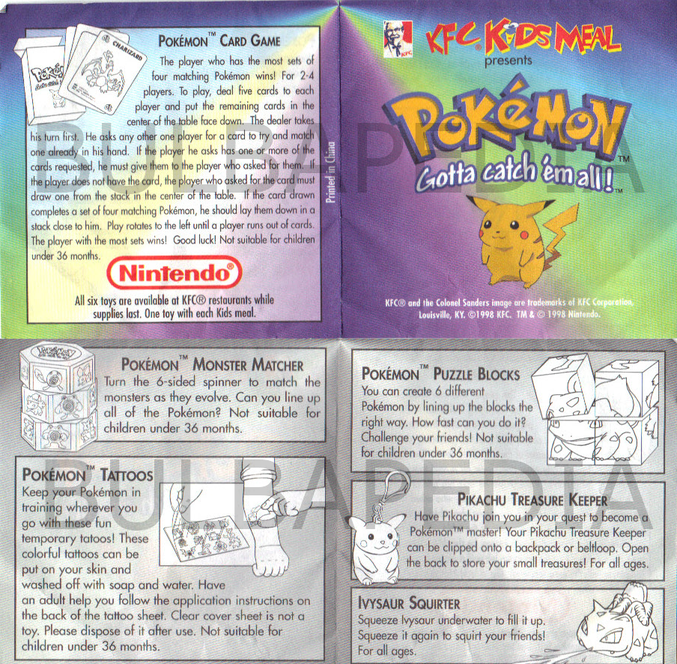
The original booklet asks players to collect sets of four matching Pokémon. The gallery shows each of the seven designs once, so that the checklist and the scans stay easy to use.
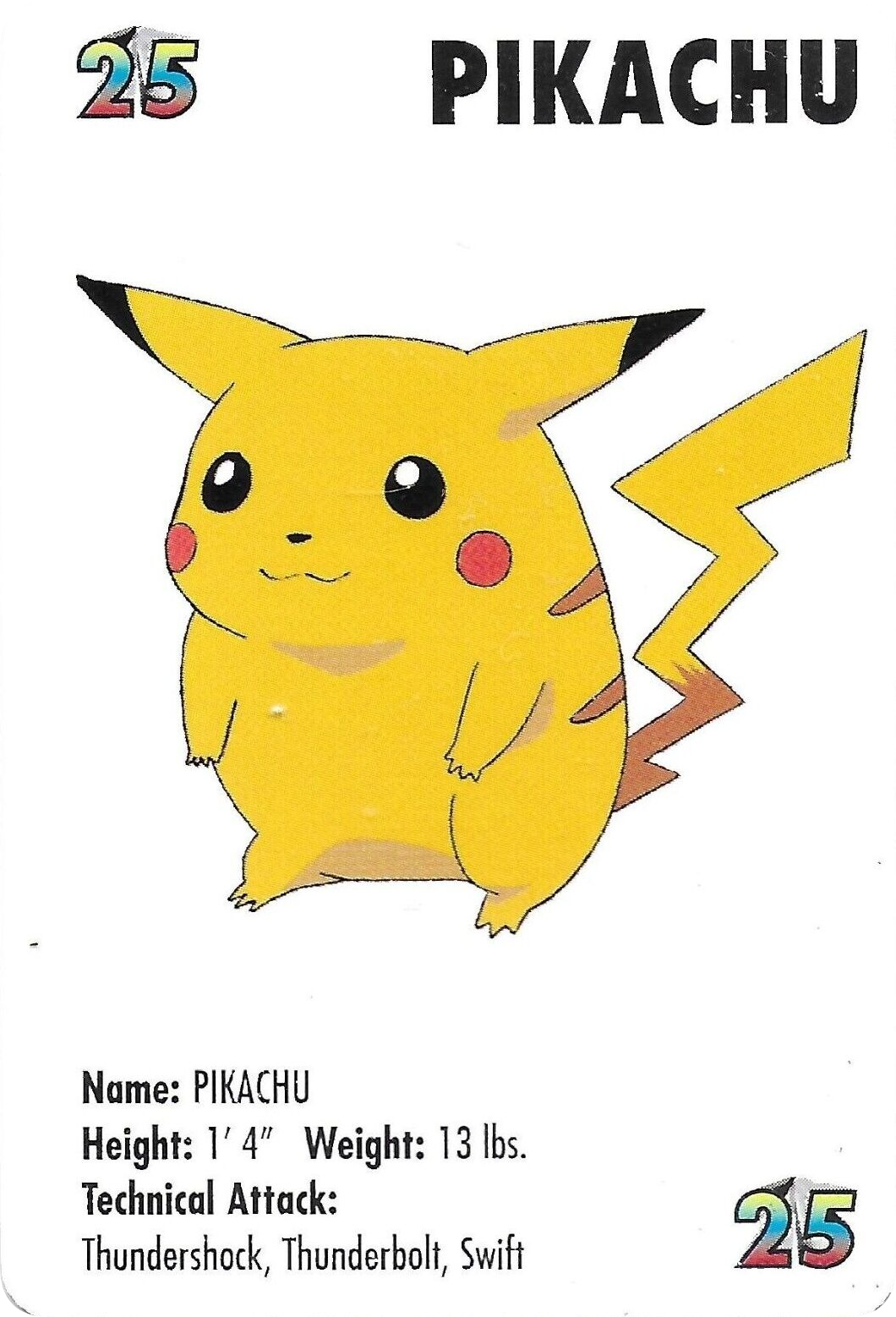
The fronts share a straightforward layout: a name and number at the top, a large character illustration, and descriptive information near the bottom. The reverse brings them together with the Pokémon logo and Pikachu. These objects belong to the KFC card game; they are not English Base Set TCG cards.
Keep the rest of the promotion in the picture
The booklet presents six Kids’ Meal items: the Pokémon Card Game, Ivysaur Squirter, Pikachu Treasure Keeper, Pokémon Monster Matcher, Pokémon Puzzle Blocks, and Tattoo Sheets. Those names and illustrations can be checked directly against the surviving booklet.
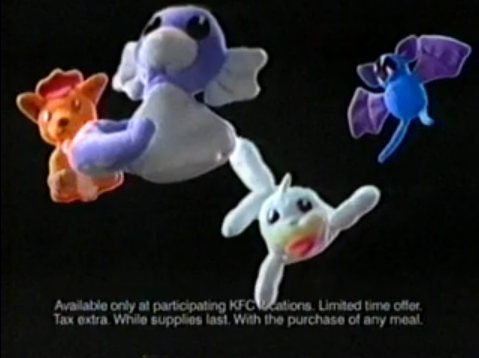
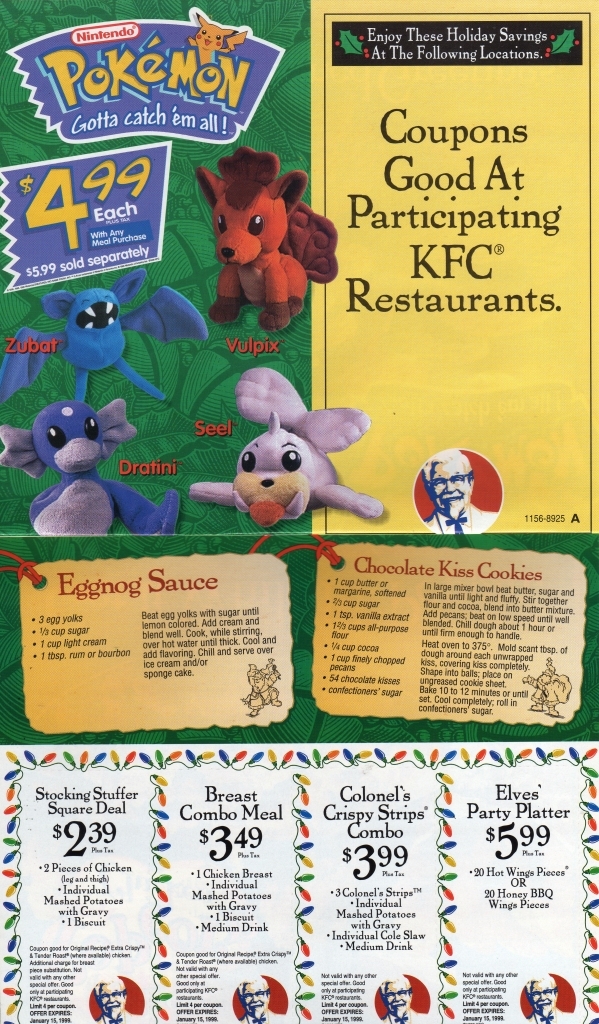
The four beanbag characters — Vulpix, Dratini, Seel, and Zubat — belonged to a separate offer. The period advertisement helps keep that distinction visible. The whole promotion extends beyond the seven card designs.
Open the original booklet · View the beanbag advertisement · View the period coupon sheet
A record that can keep growing
The original card fronts vary in resolution. The back shown on each record is a common reference scan, not the reverse of that exact photographed specimen. Full-size links preserve those distinctions instead of implying that a larger display creates new detail.
Packaging variations, clearer booklet photographs, and additional dated advertising would all strengthen this record. New evidence belongs beside the object, with its source and the date it changes our understanding.